Greenville Technical College
Nursing
Nursing

Safe and Effective Care
Physiological Integrity
Psychosocial Integrity
Health Promotion and
Maintenance
Maintenance
Concepts


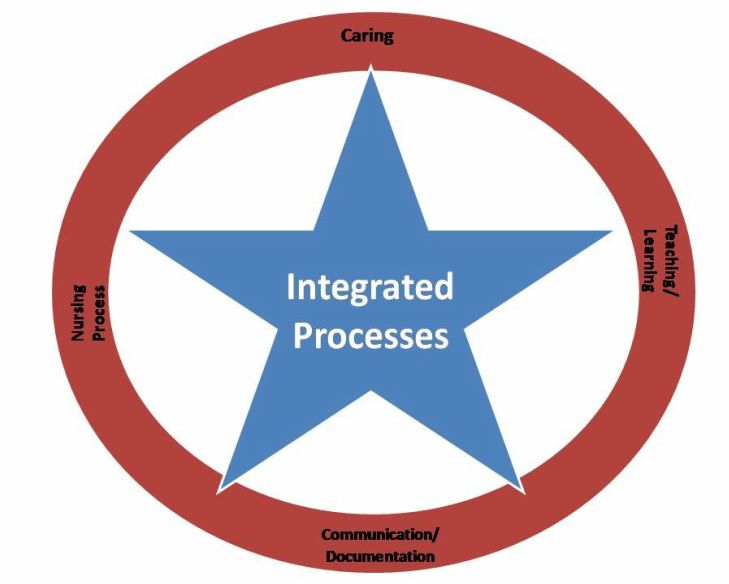




Management of Care
Professionalism is an essential component of nursing practice and demonstrates a commitment to excellence and patient centered care. Professionalism encompasses caring, strong ethical values, flexibility, continuous development of self and others, accountability, responsibility, competency, teamwork, collaboration, integrity, and continuous quality improvement.
Safety and Infection Control
Safety refers to freedom from danger, harm, or injury and the application of practices that prevent and/or minimize the occurrence and impact of adverse events. Nurses utilize these practices while providing care for both themselves and others in healthcare settings.
Infection control is a major concern for health care personnel. The process of infection control involves the identification and treatment of infection, as well as education regarding prevention of disease transmission.
Coping is a natural response to changes in physiological or psychological events to maintain homeostasis. Nurses educate patients to enhance coping mechanisms to promote and maintain healthy, positive lifestyles.
Diversity recognizes distinguishing properties that are unique and make individuals heterogeneous. Nurses must recognize diversity to provide holistic care that is congruent with an individual's or groups' biology, as well as their cultural and spiritual beliefs, practices and values.
Psychological health is a state of emotional, physical, and social well-being in which an individual is able to use their cognitive and emotional capabilities to meet the challenges of everyday life, recover and learn from difficult or traumatic experiences, and function in society. Nurses promote psychological health while providing care to patients.
Relating is a characteristic of humanity that enables people to establish bonds. Integral to human health and survival, it is the ability to communicate, establish necessary affiliations, feel a sense of connectedness and mutuality with others as well as values and principles of being. Nurses employ this concept in interacting with others and promote patients to have this ability to advocate for their own health and quality of life.
Elimination is the process by which the body excretes and secretes waste products. Elimination can occur by the kidneys, intestines, skin, and lungs. Nurses assist patients with elimination needs.
Hygiene is the science of health and its maintenance and involves measures of personal cleanliness and grooming that promote physical and psychological well-being. Nurses assist patients with hygiene needs.
Mobility refers to the ability to move freely, easily, rhythmically, and purposely in the environment. Mobility is an essential part of daily living as people must move to protect themselves from trauma and to meet their basic needs. Nurses assist patients with mobility needs and address the complications of immobility.
Nutrition is the process by which the body ingests, absorbs, transports, uses, and eliminates nutrients in foods. Nurses assist patients in assuring proper nutrition which is necessary to achieve and maintain wellness.
Pain is an unpleasant sensory and emotional experience arising from actual or potential tissue damage or described in terms of such damage. Pain includes not only the perception of an uncomfortable stimulus but also the response to the perception. Nurses assess and intervene in an attempt to alleviate pain.
Sleep is a basic human need that is regulated by hormonal and central nervous system control. Nurses address both the quantity and quality of sleep as these are both important in the maintenance of overall wellness.
Pharmacological and Parenteral Therapies Go to Top
Pharmacology is the science dealing with the origin, nature, chemistry, effects, and the uses of drugs, and other herbal/plantlife alternatives. It includes pharmacognosy, pharmacokinetics, pharmacodynamics, pharmacoctherapeutics, and toxicology. The nurse must understand these principles in order to safely administer medications and fluids both enterally and parenterally.
Clinical judgment is the process by which the nurse collects patient data, interprets the data, identifies problems, and selects appropriate nursing actions. This process involves problem solving, decision making, and critical thinking.
Physiological Adaptation Go to Top
Aging involves progressing through the human life span measured by time increments from conception to death. Aging encompasses physiological, biological, conceptional, gestational, chronological, developmental, emotional, functional and mental stages. Nurses must understand these stages and how they impact an individual's holistic health, wellness, and ability to function.
Cellular integrity describes cell reproduction, proliferation, and growth as they are regulated by the body. Nurses must understand that alterations in cellular regulation can have devastating consequences for body tissues and functions.
Fluid and electrolytes are necessary for the human body to survive. Both are regulated by various mechanisms to achieve homeostasis, or a constancy of levels within the body. Nurses must understand that in order to achieve this regulation, the intake of fluid and electrolytes must be balanced by the output of both from the body.
Immunity is the process in which the human body responds to a disease or antigen. The immune response serves the purposes of defense, homeostasis and surveillance. Nurses must understand this process in order to assess the patient's immune response.
Infection is a disease condition in the body resulting from the invasion of pathogens. Nurses must recognize the presence or absence of infection while caring for patients.
Inflammation is a localized and protective response of the body tissues to injury or infection. Nurses must recognize the presence or absence of the inflammatory response while providing care for patients.
Metabolism refers to the sum of all physical and chemical processes by which living substance is formed and maintained. As a result, energy is made available for use by the body. Nurses must be able to recognize normal and abnormal functioning of the metabolic system while caring for patients.
Neuroregulation is the control of compensatory mechanisms and adaptive neurologic functions within the body's nervous system. The neurologic system regulates all body functions, including physical, mental, and emotional capabilities. Nurses must be able to recognize normal and abnormal functioning of neuroregulation while providing care for patients.
Oxygenation is the ability of the lungs to draw air from the atmosphere, filter it, and provide oxygen as the end product to the blood while removing carbon dioxide as the air passes through the lungs. Nurses must be able to recognize normal and abnormal oxygenation while caring for patients.
Perfusion is the ability of the heart to pump blood to the lungs and generate sufficient pressure to deliver oxygenated blood received from the lungs throughout the arteries providing nutrients to the tissue through the capillary bed. Sufficient pressure must also be generated to return the deoxygenated blood from the veins to the heart which must pump the returned blood to the lungs to be oxygenated. Nurses must be able to recognize normal and abnormal perfusion while caring for patients.
Sensory addresses the ability to intake and interpret information through senses by internal or external stimuli. Nurses must be able to recognize normal and abnormal sensory response while providing care for patients.
Reduction of Risk Potential Go to Top
Anticipatory care addresses the prevention of illness and its complications based upon existing risk factors. Anticipatory care is practiced throughout the life and health continuum incorporating all ages and care settings. Nurses must address anticipatory care needs for their patients.
Diagnostics provide scientific data which is reviewed to determine the state of the individual's previous or present health status. Nurses must be able to correctly interpret this scientific data while caring for their patients.
Surgery is the practice of treating diseases, injuries, or deformities by operative procedures. Nurses must be able to recognize both potential and actual complications of surgical procedures while providing care to patients.
Community describes a geographical radius that includes an individual's home and other resources necessary to function within society. The nurse must understand the community in order to coordinate healthcare for patients and families.
Disease prevention includes measures that prevent the occurrence of disease as well as arrest its progress or reduce the consequences of a disease once established. Nurses utilize these measures while providing care to patients.
Genetics is the branch of science that explores and studies the transmission of traits and predispositions through heredity. Nurses must understand that genetics can influence an individual's health and response to illness.
Growth and development is the predictable sequence of physical and psychosocial changes from conception to death, which each individual experiences in his/her own time frame. Nurses must understand growth and development in order to care and interact with patients at the appropriate level.
Hormonal regulation involves the control of chemicals that are used for messaging in multicellular organisms. Nurses must understand the influences of hormones in maintaining homeostasis.
Health assessment is the systematic examination of the patient for objective data to assess the patient's condition and to aid the nurse in planning care. To conduct the objective component of the examination, the nurse uses techniques of inspection, auscultation, palpation, and percussion. Subjective data is also obtained from the patient and other sources.
Reproduction addresses the life cycle of humans. Nurses must be aware of this cycle in order to care for patients through all aspects of the reproductive cycle.
Wellness is not just the absence of disease but is a multidimensional state in which the individual achieves a sense of well-being. Nurses promote wellness while caring for their patients.